
Medicare Part B Billing Services That Maximize Reimbursement
Reimbursement and Best Practices for Providers
- admin
- 45 min read

We Simplify Medicare Part B Billing So You Can Focus on Patient Care
Medicare Part B billing has become increasingly complex for healthcare providers. From changing CMS regulations and documentation requirements to modifier usage, claim edits, and reimbursement rules, even small billing mistakes can lead to claim denials, delayed payments, compliance risks, and lost revenue.
At Revenue Cycle Management, we help healthcare providers understand every aspect of Medicare Part B billing with confidence. Our specialized billing team understands Medicare guidelines, CPT coding requirements, National Correct Coding Initiative (NCCI) edits, Local Coverage Determinations (LCDs), and Medicare Administrative Contractor (MAC) policies that directly impact your reimbursement.
Whether you operate a physician practice, specialty clinic, outpatient facility, therapy center, behavioral health practice, or diagnostic center, our Medicare Part B billing services are designed to maximize collections, reduce denials, and improve your revenue cycle performance.
Are Medicare Part B Billing Challenges Affecting Your Revenue?
Many healthcare providers struggle with:
- Frequent Medicare claim denials
- Incorrect CPT and HCPCS coding
- Modifier-related billing errors
- Documentation deficiencies
- Delayed reimbursements
- Medicare audit concerns
- Eligibility and coverage verification issues
- Underpaid claims and missed revenue opportunities
If these challenges sound familiar, you’re not alone. Medicare Part B regulations continue to evolve, making it difficult for providers and in-house billing teams to keep pace with changing requirements.
Why Medicare Part B Billing Requires Specialized Expertise
Unlike commercial insurance billing, Medicare Part B follows strict federal regulations and coverage policies. Claims must comply with CMS billing guidelines, medical necessity requirements, coding standards, and payer-specific rules established by Medicare Administrative Contractors, and our Medicare billing specialists stay current with:
- CMS Medicare billing updates
- Medicare Physician Fee Schedule changes
- CPT and HCPCS code revisions
- NCCI edits and bundling rules
- LCD and NCD coverage policies
- Medicare compliance requirements
- Documentation standards
- Medicare audit and recovery programs
Comprehensive Medicare Part B Billing Services
Our end-to-end Medicare Part B billing solutions include:
- Medicare patient eligibility verification
- Benefits investigation and coverage validation
- Accurate CPT, HCPCS, and ICD-10 coding
- Claim preparation and electronic submission
- Modifier review and validation
- Charge entry and claim scrubbing
- Medicare denial management
- Appeals and reconsiderations
- Payment posting and reconciliation
- Accounts receivable management
- Compliance monitoring
- Revenue cycle reporting and analytics
We Are Helping Healthcare Providers Improve Financial Performance
Our goal is simple, we help your practice collect more revenue while reducing administrative burdens.
By partnering with our Medicare Part B billing experts, providers can:
- Increase clean claim rates
- Reduce denial percentages
- Accelerate reimbursement timelines
- Improve cash flow
- Minimize compliance risks
- Lower billing overhead costs
- Strengthen revenue cycle performance
- Focus more time on patient care
When your practice Medicare billing is handled correctly, you can operate more efficiently and maintain healthier financial outcomes.
Trusted Medicare Part B Billing Support for Every Specialty
We provide Medicare Part B billing services for a wide range of healthcare specialties, including:
- Primary Care
- Internal Medicine
- Cardiology
- Orthopedics
- Physical Therapy
- Behavioral Health
- Psychiatry
- Neurology
- Pain Management
- Dermatology
- Oncology
- Ophthalmology
- Gastroenterology
- Family Medicine
- Multi-Specialty Practices
No matter your specialty, our team understands the unique billing challenges and reimbursement requirements associated with your services.
Partner with Medicare Billing Experts
Managing Medicare Part B claims should not consume valuable clinical and administrative resources. Let our experienced Medicare billing professionals handle the complexities while you focus on delivering exceptional patient care.
Contact our team today for a free Medicare billing assessment and discover how our Medicare Part B billing services can help improve reimbursement accuracy, reduce denials, and strengthen your practice’s financial health.
Why Medicare Part B Billing Has Become More Complex in 2026
Medicare Part B billing is no longer just about submitting claims with the correct CPT and ICD-10 codes. In 2026, healthcare providers face a growing number of regulatory changes, reimbursement adjustments, documentation requirements, and payer-specific rules that directly impact claim approval and payment accuracy.
The Centers for Medicare & Medicaid Services (CMS) continues to introduce updates designed to improve care quality, reduce unnecessary spending, and strengthen program integrity. While these initiatives benefit the healthcare system overall, they also create additional administrative challenges for providers and billing teams, and these several factors have contributed to the increasing complexity of Medicare Part B billing in 2026:
| Complexity Factor | Impact on Providers |
|---|---|
| Annual CMS Rule Changes | Requires continuous updates to billing processes and workflows |
| CPT and HCPCS Code Revisions | Increases coding and documentation requirements |
| Medicare Fee Schedule Updates | Affects reimbursement calculations and revenue forecasting |
| Medical Necessity Reviews | Creates additional documentation burdens |
| NCCI Edit Enforcement | Increases risk of claim rejections and bundling issues |
| LCD and NCD Policies | Coverage rules vary by service and geographic region |
| Medicare Audits and Reviews | Higher compliance expectations for providers |
| Quality Reporting Programs | Additional reporting and reimbursement considerations |
Understanding Medicare Part B Coverage and Reimbursement
Medicare Part B is a component of Original Medicare that helps cover medically necessary outpatient services, preventive care, physician services, diagnostic testing, durable medical equipment, and various healthcare services delivered outside of an inpatient hospital setting.
For healthcare providers, understanding what Medicare Part B covers is essential for accurate claim submission and proper reimbursement. Coverage decisions are based on federal Medicare guidelines, medical necessity requirements, and service-specific policies established by CMS and Medicare Administrative Contractors (MACs). Medicare Part B generally covers the following categories of services:
| Covered Service Category | Examples |
|---|---|
| Physician Services | Office visits, consultations, evaluations, and treatment services |
| Preventive Services | Annual wellness visits, screenings, and preventive counseling |
| Diagnostic Testing | Laboratory testing, imaging studies, and diagnostic procedures |
| Outpatient Care | Services performed in clinics, physician offices, and outpatient facilities |
| Mental Health Services | Psychiatric evaluations, therapy, and behavioral health treatment |
| Physical and Occupational Therapy | Rehabilitation and therapeutic interventions |
| Durable Medical Equipment (DME) | Wheelchairs, walkers, oxygen equipment, and related supplies |
| Telehealth Services | Eligible virtual healthcare encounters |
| Certain Injectable Medications | Provider-administered drugs covered under Medicare Part B |
How Medicare Part B Reimbursement Works
Medicare Part B reimbursement is primarily based on the Medicare Physician Fee Schedule (MPFS), which assigns payment rates to covered services. Reimbursement amounts are determined using several factors, including:
- CPT or HCPCS code selection
- Relative Value Units (RVUs)
- Geographic Practice Cost Indices (GPCIs)
- CMS Conversion Factor
- Medical necessity documentation
- Coverage eligibility requirements
- Modifier application when applicable
Common Reimbursement Challenges for Providers
Many providers experience reimbursement issues due to:
- Incorrect CPT or HCPCS coding
- Missing or invalid modifiers
- Inadequate documentation
- Failure to meet LCD requirements
- Eligibility verification errors
- Duplicate claim submissions
- Non-covered service billing
- Incorrect place-of-service coding
These challenges can significantly impact cash flow and increase administrative workloads. A proactive Medicare billing strategy helps providers submit compliant claims, accelerate payment cycles, and maximize allowable reimbursement under current Medicare guidelines.
What Is Medicare Part B Billing?
Medicare Part B billing is the process of submitting claims to Medicare for outpatient medical services, physician services, preventive care, diagnostic testing, durable medical equipment (DME), mental health services, therapy services, and other covered healthcare treatments.
Healthcare providers must accurately document services, assign appropriate CPT, HCPCS, and ICD-10 codes, apply required modifiers, and submit claims according to CMS billing guidelines. Once submitted, Medicare reviews the claim for coverage eligibility, medical necessity, coding accuracy, and compliance before issuing reimbursement.
Unlike commercial insurance billing, Medicare Part B billing is governed by strict federal regulations and requires providers to follow CMS policies, National Correct Coding Initiative (NCCI) edits, Local Coverage Determinations (LCDs), and Medicare Administrative Contractor (MAC) requirements.
Today, Medicare Part B supports more than 7,400 covered physician and outpatient services and remains one of the largest reimbursement programs for healthcare providers in the United States.
How Medicare Part B Differs From Medicare Part A
Many providers mistakenly assume Medicare Part A and Part B follow similar billing rules. In reality, they cover different services and use different reimbursement methodologies.
| Feature | Medicare Part A | Medicare Part B |
|---|---|---|
| Coverage Type | Inpatient Hospital Coverage | Outpatient Medical Coverage |
| Primary Services | Hospital stays, SNF care, hospice, inpatient services | Physician visits, outpatient care, preventive services |
| Billing Entity | Hospitals and facilities | Physicians, clinics, outpatient providers |
| Payment Method | Prospective Payment Systems (PPS) | Medicare Physician Fee Schedule (MPFS) |
| Claim Forms | UB-04 | CMS-1500 |
| Reimbursement Basis | Facility-based payments | Fee-for-service payments |
| Common Settings | Hospitals, skilled nursing facilities | Physician offices, outpatient centers |
Healthcare Providers Eligible to Bill Medicare Part B
A wide range of healthcare professionals can enroll in Medicare and submit Part B claims for covered services, eligible providers include:
- Physicians (MD and DO)
- Nurse Practitioners (NPs)
- Physician Assistants (PAs)
- Clinical Psychologists
- Psychiatrists
- Clinical Social Workers
- Physical Therapists
- Occupational Therapists
- Speech-Language Pathologists
- Chiropractors
- Audiologists
- Registered Dietitians
- Clinical Nurse Specialists
- Certified Nurse Midwives
- Independent Diagnostic Testing Facilities (IDTFs)
- Durable Medical Equipment Suppliers
- Ambulatory Surgical Centers
- Rural Health Clinics
- Federally Qualified Health Centers
Services Covered Under Medicare Part B
Medicare Part B covers medically necessary services and preventive care designed to help beneficiaries maintain health and manage chronic conditions.
Commonly Covered Services
| Service Category | Examples |
|---|---|
| Evaluation & Management (E/M) | Office visits, consultations, follow-up visits |
| Preventive Care | Annual Wellness Visits, screenings, vaccinations |
| Mental Health | Psychiatric evaluations, psychotherapy |
| Diagnostic Testing | Laboratory services, imaging, pathology |
| Therapy Services | Physical, occupational, and speech therapy |
| Telehealth Services | Eligible virtual healthcare encounters |
| DME Services | Walkers, wheelchairs, oxygen equipment |
| Outpatient Procedures | Minor surgeries and interventions |
| Chronic Care Management | Care coordination and monitoring |
| Provider-Administered Drugs | Certain injectable medications |
Medicare Part B Claims Lifecycle
Understanding the complete claim journey helps your medical practice to identify revenue cycle bottlenecks and reduce denials.
Patient Registration
Patient demographics, Medicare eligibility, and insurance information are verified before services are rendered to your patients.
Service Documentation
Providers document the encounter, diagnosis, treatment plan, and medical necessity.
Medical Coding
Certified coders assign:
- CPT Codes
- HCPCS Codes
- ICD-10 Diagnosis Codes
- Applicable Modifiers
Claim Scrubbing
Claims are reviewed for coding errors, missing information, and Medicare compliance issues.
Claim Submission
Claims are electronically submitted to the appropriate Medicare Administrative Contractor (MAC).
Adjudication
Medicare reviews:
- Coverage eligibility
- Coding accuracy
- Medical necessity
- Modifier usage
- Documentation requirements
Payment Processing
Approved claims are reimbursed according to the Medicare Physician Fee Schedule.
Denial Management and Appeals
Denied or underpaid claims are investigated, corrected, and appealed when appropriate.
Medicare Part B Statistics Every Provider Should Know
Healthcare organizations that understand Medicare market trends are better positioned to forecast revenue, improve compliance, and prepare for future reimbursement changes.
Medicare Part B Market Statistics
| Medicare Part B Market Metric | Latest Available Data |
|---|---|
| Covered Physician & Outpatient Services | More than 7,400 services |
| Clinicians Billing Medicare Fee-for-Service | Approximately 1.5 Million |
| Physician Fee Schedule Spending | $93.8 Billion |
| Share of FFS Medicare Spending | More than 15% |
| Medicare Part B Standard Premium (2026) | $202.90 per month |
| Medicare Part B Annual Deductible (2026) | $283 |
| Primary Payment Method | Medicare Physician Fee Schedule (MPFS) |
| Major Claim Review Factors | Medical Necessity, Coding Accuracy, Documentation, Coverage Compliance |
Medicare Part B Covered Services
Medicare Part B covers a wide range of medically necessary outpatient services that help beneficiaries maintain their health, manage chronic conditions, receive preventive care, and access specialized treatments. For healthcare providers, understanding which services are covered under Medicare Part B is essential for accurate billing, reimbursement optimization, and compliance with CMS regulations.
Coverage is generally determined by medical necessity, Medicare coverage policies, National Coverage Determinations (NCDs), Local Coverage Determinations (LCDs), and proper documentation. Providers must ensure that every billed service is supported by appropriate clinical records and meets Medicare’s reimbursement requirements, below are some of the most commonly billed Medicare Part B service categories.
Physician Services
Physician services represent one of the largest categories of Medicare Part B reimbursement. These services include evaluation, diagnosis, treatment, and ongoing management of patient health conditions provided by qualified healthcare professionals, and most common physician services include:
- New patient visits
- Established patient visits
- Evaluation and Management (E/M) services
- Specialist consultations
- Chronic care management
- Transitional care management
- Minor office procedures
- Follow-up visits
- Care coordination services
Accurate documentation and E/M code selection are critical for ensuring proper reimbursement and avoiding audit risks.
Commonly Billed Physician Service Codes
| Service Type | Common CPT Codes |
|---|---|
| New Patient Visits | 99202–99205 |
| Established Patient Visits | 99211–99215 |
| Transitional Care Management | 99495, 99496 |
| Chronic Care Management | 99490, 99439 |
| Principal Care Management | 99424–99427 |
Preventive Services

Medicare Part B places significant emphasis on preventive healthcare by covering screenings, wellness visits, vaccinations, and counseling services designed to detect health issues early and improve patient outcomes.
Covered preventive services may include:
- Annual Wellness Visits
- Initial Preventive Physical Examination (IPPE)
- Depression screening
- Cardiovascular screening
- Diabetes screening
- Colorectal cancer screening
- Breast cancer screening
- Prostate cancer screening
- Smoking cessation counseling
- Obesity counseling
- Certain preventive vaccinations
Preventive services often have specific frequency limitations and coverage criteria that providers must follow.
Popular Preventive Service Codes
| Preventive Service | Common HCPCS/CPT Codes |
|---|---|
| Annual Wellness Visit | G0438, G0439 |
| Welcome to Medicare Visit | G0402 |
| Smoking Cessation Counseling | 99406, 99407 |
| Depression Screening | G0444 |
| Obesity Counseling | G0447 |
Telehealth Services
Telehealth continues to play an important role in healthcare delivery, allowing providers to evaluate, diagnose, and manage patients remotely when permitted under current Medicare regulations, and Medicare Part B covers various telehealth services when CMS requirements are met. The most common telehealth services include:
- Virtual office visits
- Follow-up consultations
- Behavioral health counseling
- Medication management
- Chronic disease management
- Care coordination services
- Remote patient interactions
Providers must apply the correct place-of-service codes and modifiers based on current CMS telehealth guidance.
Common Telehealth Billing Codes
| Service Category | Common CPT Codes |
|---|---|
| Telehealth E/M Visits | 99202–99215 |
| Virtual Check-Ins | G2012 |
| Remote Evaluation | G2250, G2251 |
| Online Digital E/M Services | 99421–99423 |
Behavioral Health Services
Behavioral and mental health services remain a significant component of Medicare Part B coverage. Medicare beneficiaries can access various psychiatric and psychological services through qualified healthcare providers, covered behavioral health services may include:
- Psychiatric evaluations
- Individual psychotherapy
- Family psychotherapy
- Group therapy
- Substance use disorder treatment
- Behavioral assessments
- Medication management
- Collaborative care management
Behavioral health claims require detailed documentation supporting medical necessity and treatment plans.
claim denials
Frequently Used Behavioral Health Codes
| Service Type | Common CPT Codes |
|---|---|
| Psychiatric Diagnostic Evaluation | 90791, 90792 |
| Individual Psychotherapy | 90832, 90834, 90837 |
| Family Psychotherapy | 90846, 90847 |
| Group Psychotherapy | 90853 |
| Psychiatric Medication Management | 99202–99215 |
Physical Therapy Services
Medicare Part B covers medically necessary rehabilitation services designed to restore function, improve mobility, reduce pain, and enhance quality of life, physical therapy coverage commonly includes:
- Therapeutic exercise
- Neuromuscular reeducation
- Gait training
- Therapeutic activities
- Manual therapy
- Functional training
- Balance improvement programs
- Post-surgical rehabilitation
Therapy documentation must clearly demonstrate medical necessity, measurable goals, progress, and skilled intervention.
Common Physical Therapy Codes
| Service Type | Common CPT Codes |
|---|---|
| Therapeutic Exercise | 97110 |
| Neuromuscular Reeducation | 97112 |
| Therapeutic Activities | 97530 |
| Manual Therapy | 97140 |
| Gait Training | 97116 |
Diagnostic Testing
Diagnostic testing allows providers to identify, evaluate, and monitor medical conditions. Medicare Part B covers many diagnostic services when ordered appropriately and supported by medical necessity, the most common examples include:
- Electrocardiograms (EKGs)
- Cardiac stress testing
- Ultrasound procedures
- Radiology services
- CT scans
- MRI studies
- Pulmonary function testing
- Sleep studies
- Diagnostic pathology services
Providers must ensure diagnosis codes support the need for testing.
Examples of Diagnostic Procedure Codes
| Diagnostic Service | Common CPT Codes |
|---|---|
| Electrocardiogram | 93000 |
| Cardiovascular Stress Test | 93015 |
| Chest X-Ray | 71045 |
| Echocardiography | 93306 |
| Pulmonary Function Testing | 94010 |
DMEPOS Services
Durable Medical Equipment, Prosthetics, Orthotics, and Supplies (DMEPOS) are covered under Medicare Part B when prescribed by qualified providers and medically necessary for patient care, and covered DMEPOS categories include:
- Wheelchairs
- Walkers
- Hospital beds
- Oxygen equipment
- Diabetic supplies
- Orthotic devices
- Prosthetic devices
- Continuous Positive Airway Pressure (CPAP) equipment
DMEPOS billing often involves additional documentation, supplier enrollment requirements, and proof-of-delivery standards.
Common DMEPOS HCPCS Codes
| Equipment Type | Example HCPCS Codes |
|---|---|
| Standard Wheelchair | K0001 |
| Walker | E0143 |
| Oxygen Equipment | E1390 |
| CPAP Device | E0601 |
| Diabetic Supplies | Various HCPCS Codes |
Laboratory Services
Laboratory testing plays a critical role in disease detection, diagnosis, and treatment planning. Medicare Part B covers many clinical laboratory services ordered by qualified healthcare providers.
Covered laboratory services include:
- Blood chemistry testing
- Hematology testing
- Urinalysis
- Pathology services
- Infectious disease testing
- Molecular diagnostics
- Genetic testing when covered
- Preventive laboratory screenings
care
Medicare Part B Compliance Requirements
Medicare Part B compliance is one of the most critical responsibilities for healthcare providers participating in the Medicare program. CMS, the Office of Inspector General (OIG), and the Department of Justice (DOJ) closely monitor billing activities to ensure providers submit accurate claims, maintain proper documentation, and comply with federal healthcare regulations.
Failure to comply with Medicare requirements can lead to claim denials, payment recoupments, civil monetary penalties, exclusion from federal healthcare programs, audits, investigations, and potential legal action. Multiple federal laws and regulations govern Medicare billing, fraud prevention, patient referrals, and provider relationships.
CMS Billing Guidelines
The Centers for Medicare & Medicaid Services (CMS) establishes the billing rules that providers must follow when submitting Medicare Part B claims.
CMS expects providers to:
- Bill only medically necessary services
- Submit accurate CPT, HCPCS, and ICD-10 codes
- Maintain complete clinical documentation
- Follow National Correct Coding Initiative (NCCI) edits
- Comply with Local Coverage Determinations (LCDs)
- Follow National Coverage Determinations (NCDs)
- Correct billing errors promptly
- Maintain supporting documentation for audits
Every Medicare claim must accurately reflect the services performed and be supported by documentation demonstrating medical necessity.
Key CMS Billing Requirements
| Compliance Area | CMS Expectation |
|---|---|
| Medical Necessity | Services must be clinically justified |
| Coding Accuracy | Correct CPT, HCPCS, and ICD-10 reporting |
| Documentation | Complete and timely records |
| Claim Submission | Accurate and truthful billing |
| Record Retention | Supporting records maintained for audits |
Failure to meet CMS billing requirements may result in claim denials, audits, overpayment demands, and compliance reviews.
HIPAA Compliance Requirements
Healthcare providers billing Medicare Part B must also comply with the Health Insurance Portability and Accountability Act (HIPAA).
HIPAA establishes national standards for protecting patient health information and securing electronic healthcare transactions, HIPAA compliance generally includes:
- Protection of Protected Health Information (PHI)
- Secure electronic claim transmission
- Access controls for patient records
- Workforce privacy training
- Breach notification procedures
- Data security safeguards
- Business associate agreements
For Medicare billing departments, HIPAA compliance is essential because billing systems routinely handle sensitive patient information during claim creation, submission, payment posting, and appeals processing.
HIPAA Compliance Focus Areas
| Requirement | Purpose |
|---|---|
| Privacy Rule | Protect patient information |
| Security Rule | Secure electronic data |
| Access Controls | Limit unauthorized access |
| Workforce Training | Improve compliance awareness |
| Breach Response | Address security incidents |
Common Medicare Part B Billing Challenges
Medicare Part B billing presents unique challenges that can significantly impact reimbursement, cash flow, compliance, and operational efficiency. Even experienced healthcare organizations struggle to keep pace with evolving CMS regulations, coding updates, documentation requirements, and payer-specific billing rules.
Small billing mistakes can quickly lead to claim denials, payment delays, increased accounts receivable balances, audit exposure, and lost revenue. According to industry revenue cycle studies, many Medicare denials are preventable when providers implement strong billing processes, coding audits, and proactive claim review procedures.
Understanding the most common Medicare Part B billing challenges allows healthcare providers to strengthen compliance, improve clean claim rates, and maximize reimbursement opportunities.
Frequent Coding Errors
Coding errors remain one of the leading causes of Medicare claim denials and underpayments.
Because Medicare reimbursement is driven by CPT, HCPCS, and ICD-10 coding, even minor mistakes can trigger claim edits, denials, or reduced payments.
Common coding errors include:
- Incorrect CPT code selection
- Invalid HCPCS codes
- Outdated procedure codes
- Diagnosis-to-procedure mismatches
- Upcoding or downcoding
- Missing diagnosis specificity
- Incorrect place-of-service coding
- NCCI edit violations
Providers must ensure that coding accurately reflects the services performed and is fully supported by clinical documentation.
Impact of Coding Errors
| Coding Issue | Potential Consequence |
|---|---|
| Incorrect CPT Code | Claim denial or underpayment |
| Invalid Diagnosis Code | Medical necessity denial |
| NCCI Violation | Procedure bundling denial |
| Outdated Codes | Claim rejection |
| Coding Inconsistencies | Audit risk |
Routine coding audits and certified coding support can significantly reduce reimbursement risks.
Medical Necessity Denials
Medical necessity denials occur when Medicare determines that the documentation does not adequately support the need for the service provided.
CMS requires providers to demonstrate that every billed service is reasonable and necessary for diagnosing or treating a patient’s condition. Common medical necessity issues include:
- Insufficient clinical documentation
- Diagnosis codes that do not support coverage
- Failure to meet LCD requirements
- Missing treatment rationale
- Lack of supporting test results
- Frequency limitations exceeded
- Non-covered service utilization
Medical necessity denials are particularly common in:
- Physical therapy
- Diagnostic testing
- DMEPOS services
- Behavioral health
- Pain management
- Advanced imaging
Preventing Medical Necessity Denials
- Verify LCD and NCD requirements
- Improve provider documentation
- Link diagnoses correctly
- Conduct pre-submission reviews
- Train providers on Medicare coverage policies
Modifier Mistakes
Modifiers communicate important information about how a service was performed and often determine whether Medicare reimburses a claim correctly.
Unfortunately, modifier errors are among the most common billing mistakes seen by Medicare contractors, and most common modifier problems include:
- Missing modifiers
- Invalid modifier combinations
- Incorrect telehealth modifiers
- Therapy modifier errors
- Bilateral procedure modifier mistakes
- Modifier sequencing errors
- Overuse of modifier 25
- Improper use of modifier 59
Frequently used Medicare modifiers include:
- Modifier 25
- Modifier 59
- Modifier 24
- Modifier 26
- Modifier TC
- Modifier GP
- Modifier GO
- Modifier KX
- Modifier 95
Consequences of Modifier Errors
| Modifier Error Type | Consequence & Impact |
|---|---|
| Missing Required Modifier | Immediate claim rejection or denial due to incomplete service documentation. |
| Incompatible CPT/Modifier Combo | Automated system clear-outs resulting in "invalid procedure code" denials. |
| Inaccurate Multi-Procedure Sequencing | Severe underpayment due to improper application of multiple procedure discount rules. |
| Unbundled Service Reporting | Triggers NCCI edit rejections, global surgery package violations, and penalty fees. |
| Repetitive Billing Anomalies | Elevates provider audit risk, flags compliance algorithms, and prompts manual reviews. |
Documentation Deficiencies
Strong documentation is the foundation of Medicare compliance and reimbursement.
Even when coding is accurate, insufficient documentation can result in claim denials, audit findings, payment recoupments, and compliance concerns.
- Missing provider signatures
- Incomplete progress notes
- Lack of medical necessity support
- Missing treatment plans
- Inadequate time documentation
- Missing orders or referrals
- Incomplete telehealth records
- Lack of patient assessments
Documentation should clearly demonstrate:
- Patient condition
- Clinical findings
- Provider decision-making
- Services performed
- Treatment goals
- Outcomes and progress
High-Risk Documentation Areas
| Service Type | Documentation Risk |
|---|---|
| E/M Services | Insufficient clinical detail |
| Therapy Services | Missing progress updates |
| Behavioral Health | Incomplete treatment plans |
| DMEPOS | Weak medical necessity support |
| Telehealth | Missing encounter requirements |
Top Medicare Denial Reasons
| Denial Reason | Description | Revenue Impact |
|---|---|---|
| Medical Necessity Not Supported | Documentation fails to justify service | High |
| Incorrect CPT or HCPCS Coding | Coding errors trigger claim denial | High |
| Missing or Invalid Modifiers | Modifier requirements not met | High |
| Documentation Deficiencies | Clinical records incomplete | High |
| Eligibility Verification Failure | Coverage issues identified | Moderate |
| LCD or NCD Violations | Service does not meet coverage criteria | High |
| Duplicate Claim Submission | Multiple claims submitted | Moderate |
| Timely Filing Issues | Claim submitted after deadline | High |
| Diagnosis Code Errors | ICD-10 coding problems | Moderate |
| Provider Enrollment Issues | Medicare enrollment discrepancies | High |
| Place of Service Errors | Incorrect POS coding | Moderate |
| Coordination of Benefits Problems | Secondary payer conflicts | Moderate |
Successfully managing Medicare Part B billing challenges requires a combination of accurate coding, strong documentation, eligibility verification, denial prevention strategies, and continuous compliance monitoring. Providers that proactively address these issues can improve clean claim rates, accelerate reimbursement, reduce write-offs, and strengthen overall revenue cycle performance.
Benefits of Outsourcing Medicare Part B Billing
Managing Medicare Part B billing has become increasingly challenging for healthcare providers. Between evolving CMS regulations, annual coding updates, medical necessity requirements, modifier rules, compliance obligations, and denial management, maintaining an efficient in-house billing operation requires significant time, staffing, and financial resources.
For many physician practices, specialty clinics, therapy providers, behavioral health organizations, and outpatient facilities, outsourcing Medicare Part B billing has become a strategic revenue cycle decision rather than simply a cost-saving measure.
At Revenue Cycle Management, we provide comprehensive Revenue Cycle Management (RCM) solutions designed to help healthcare providers maximize Medicare reimbursement, reduce billing errors, improve compliance, and accelerate cash flow. Our Medicare billing specialists manage the entire billing lifecycle so your team can focus on delivering exceptional patient care.
Increased Revenue Collection
One of the biggest advantages of outsourcing Medicare Part B billing is improved revenue performance.
Many healthcare organizations unknowingly lose revenue due to:
- Missed billing opportunities
- Coding inaccuracies
- Underpayments
- Untimely follow-up
- Unresolved denials
- Documentation deficiencies
- Incomplete claims
Our Medicare billing experts identify revenue leakage points throughout the revenue cycle and implement proven strategies to improve collections.
How We Help Increase Revenue
- Accurate CPT and HCPCS coding
- Comprehensive claim scrubbing
- Proactive denial prevention
- Underpayment identification
- Aggressive accounts receivable follow-up
- Timely claim submission
- Appeals management and recovery
By optimizing every stage of the Medicare billing process, providers can collect more of the revenue they have rightfully earned.
Revenue Impact Areas
| Revenue Opportunity | Potential Benefit |
|---|---|
| Cleaner Claims | Higher first-pass acceptance rates |
| Denial Prevention | Fewer lost reimbursements |
| Underpayment Recovery | Increased collections |
| Faster Claim Processing | Improved cash flow |
| Stronger A/R Management | Reduced outstanding balances |
Reduced Denial Rates
Medicare claim denials can significantly impact practice profitability and administrative efficiency, and common denial causes include:
- Medical necessity issues
- Coding errors
- Modifier mistakes
- Documentation deficiencies
- Eligibility verification failures
- LCD and NCD compliance issues
Our team works proactively to identify and correct potential claim issues before submission.
Our Denial Reduction Strategy
- Eligibility verification
- Documentation review
- Coding audits
- Modifier validation
- Claim scrubbing technology
- Medicare compliance monitoring
- Root-cause denial analysis
Reducing denials not only improves reimbursement but also lowers administrative costs associated with rework and appeals.
Better Financial Reporting
Revenue cycle visibility is critical for informed business decisions. Many practices struggle to track key performance indicators due to limited reporting capabilities or inconsistent financial oversight. Our RCM team provides detailed reporting and analytics that help providers monitor:
- Claim acceptance rates
- Collection performance
- Denial trends
- Accounts receivable aging
- Reimbursement patterns
- Provider productivity
- Revenue cycle performance
Key Reports We Provide
| Report Type | Business Value |
|---|---|
| Revenue Reports | Track collections and growth |
| Denial Analysis | Identify recurring issues |
| A/R Aging Reports | Improve collections strategy |
| Payment Trend Reports | Forecast revenue performance |
| KPI Dashboards | Support strategic decision-making |
In-House vs Outsourced Medicare Billing
| Billing Function | In-House Billing Team | Outsourced Medicare Billing with Us |
|---|---|---|
| Medicare Expertise | Limited to available staff experience | Dedicated Medicare billing specialists |
| CMS Regulatory Updates | Requires ongoing internal training | Continuous monitoring of CMS changes |
| Coding Accuracy | Varies by staff skill level | Certified coding and billing expertise |
| Claim Scrubbing | Often limited by software and staffing | Comprehensive pre-submission review |
| Denial Management | Reactive approach | Proactive denial prevention and recovery |
| Accounts Receivable Follow-Up | Time-consuming and inconsistent | Dedicated A/R management team |
| Staffing Costs | Salaries, benefits, training, turnover | Predictable service-based investment |
| Compliance Monitoring | Internal responsibility | Ongoing compliance oversight |
| Reporting and Analytics | Often limited | Detailed revenue cycle reporting |
| Scalability | Requires additional hiring | Easily scales with practice growth |
| Reimbursement Speed | May vary based on resources | Optimized claim submission workflows |
| Revenue Optimization | Limited resources for analysis | Continuous revenue improvement strategies |
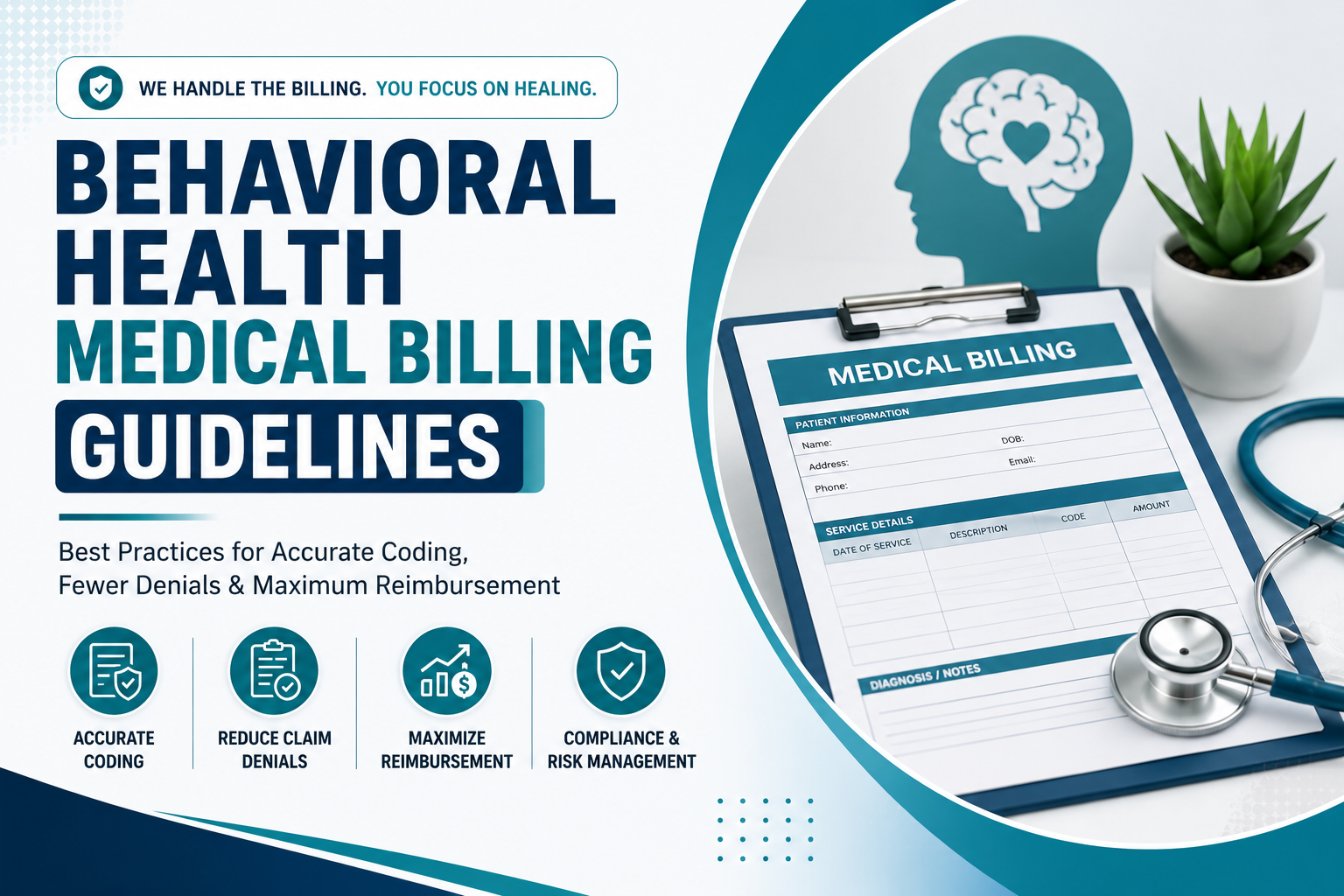
Behavioral Health Billing That Increases Revenue & Reduces Denials
From psychotherapy and psychiatry to telehealth, BHI, CoCM, and substance use disorder billing, we help behavioral health providers improve collections while staying compliant with Medicare, Medicaid, and commercial payer requirements.

Written by: Muhammad Aslam
Muhammad Aslam is a seasoned RCM professional with over 15 years of experience helping healthcare providers increase revenue and improve operational efficiency. With a background as a specialist at CareCloud and Right Medical Billing, he brings deep industry expertise and practical knowledge to every engagement. His experience enables him to deliver strategic, results-driven solutions that keep practices compliant, financially strong, and well-positioned in today’s evolving regulatory environment.
Medical Billing Services @ 2.45% of Total Collection
Get a free assessment from our billing experts
Recent Articles
Our High Quality Medical Billing Services